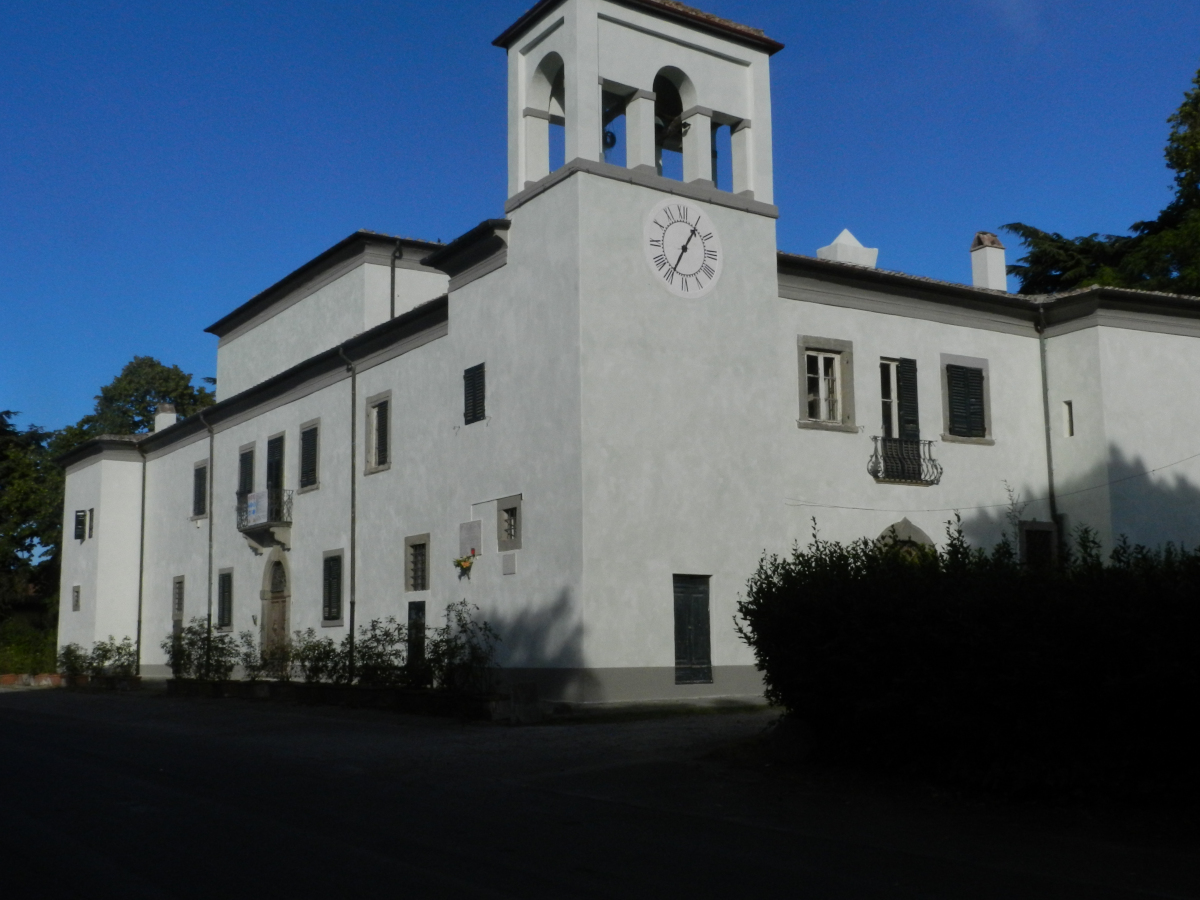
Borbone Estate and Macchia Lucchese – Nature and History on the Northern Coast of the Park
The Borbone Estate and Macchia Lucchese represent the northernmost coastal sector of the Migliarino, San Rossore and Massaciuccoli Natural Park, an area where history, natural environment, and coastal landscapes merge into a unique setting. Located between Viareggio and Torre del Lago and overlooking the Ligurian Sea, this estate preserves highly valuable natural environments, including coastal woodlands, back-dune wetlands, and unspoiled beaches.
History of the Borbone Estate and Macchia Lucchese
The history of this estate dates back to ancient times, when vast marshlands and flood-prone areas made the landscape difficult to inhabit and hostile to human settlement. During Roman rule, organized land reclamation improved the hydraulic system, but the decline of the Roman Empire and subsequent invasions led once again to hydraulic degradation and depopulation.
From the 15th century onwards, gradual resettlement began, and in 1513 the Republic of Lucca strengthened the maritime port of Viareggio, promoting land reclamation and new settlements. Although endemic malaria was not completely eliminated, these interventions laid the foundations for population growth and the development of coastal villages.
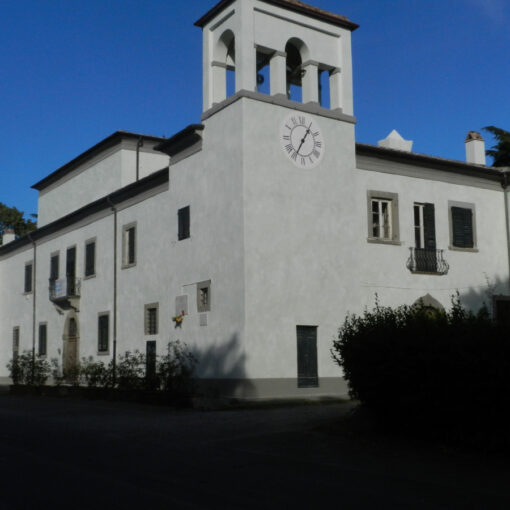
The Borbone Estate took shape in 1819, when Maria Luisa of Bourbon, Duchess of Lucca, expropriated large portions of land to create a noble residential complex. Among the most important structures is the historic Villa Borbone, designed by architect Lorenzo Nottolini as a hunting residence and the operational center of the estate.
Only in the 20th century, thanks to the work of land reclamation consortia and the introduction of modern mechanical technologies (from 1927 onwards), was the problem of marshland effectively resolved. Within a few years, vast wetland areas both north and south of the Massaciuccoli basin were reclaimed, enabling the development of seaside tourism and the coastal towns we know today, such as Torre del Lago and Viareggio.
Landscape, environment, and botanical interest
The Macchia Lucchese, which includes the Borbone Estate, is characterized by an atypical coastal woodland. Rather than classic Mediterranean scrub, it is mainly a coastal pine forest and woodland with sub-Atlantic elements, influenced by the humid climate created by the proximity of the Apuan Alps and the maritime microclimate.
Natural environments
The estate features three main natural environments in sequence:
- Coastal woodland, with species such as holm oak, alder, ash, English oak, and pine
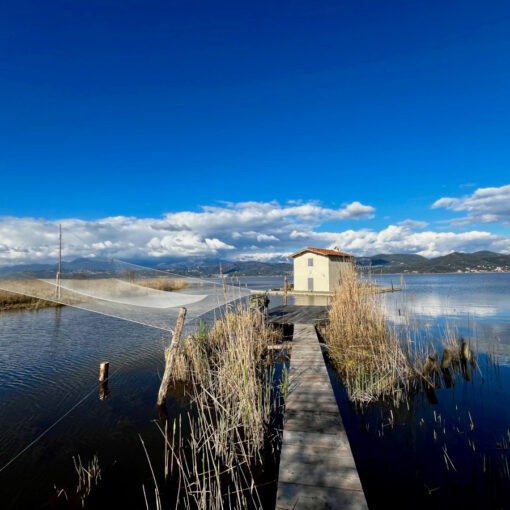
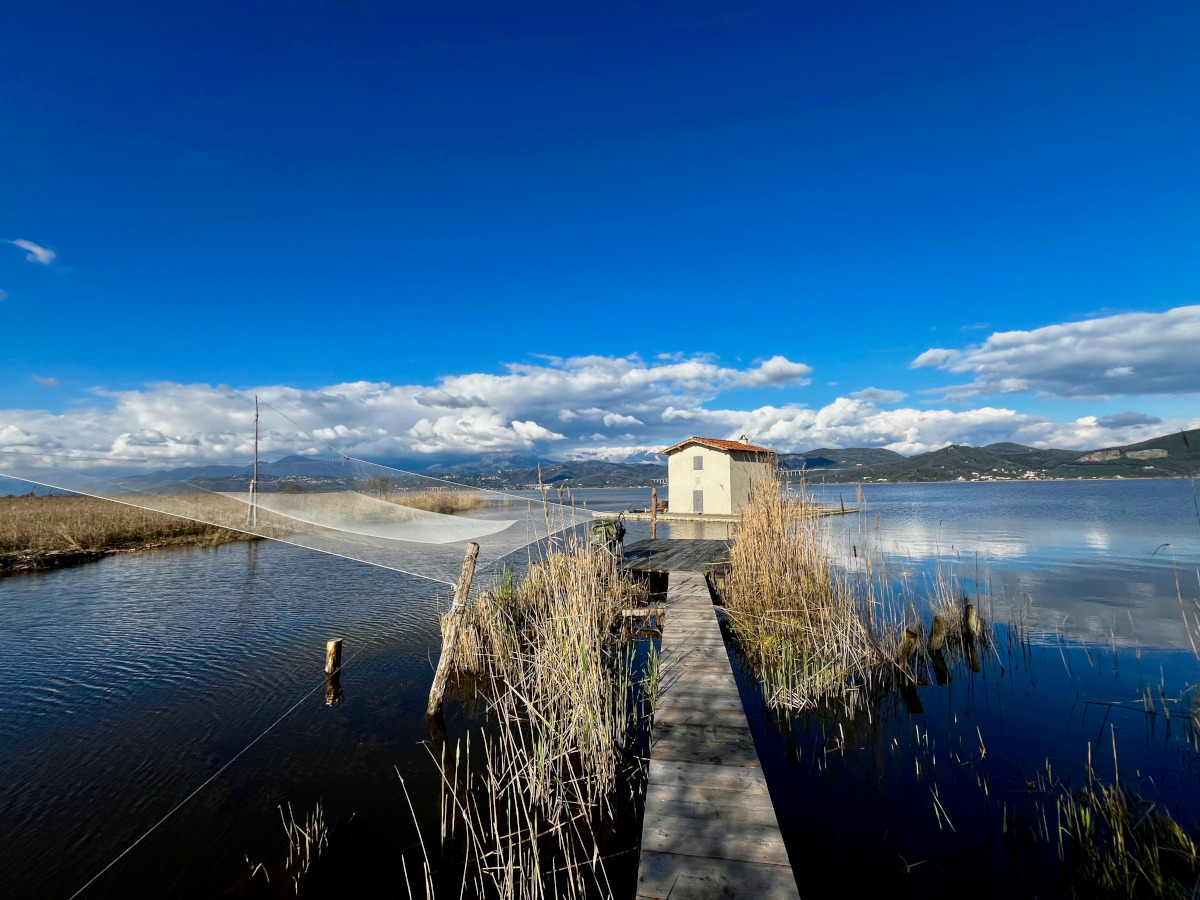
- Back-dune wetlands, humid areas connected to the coastal system
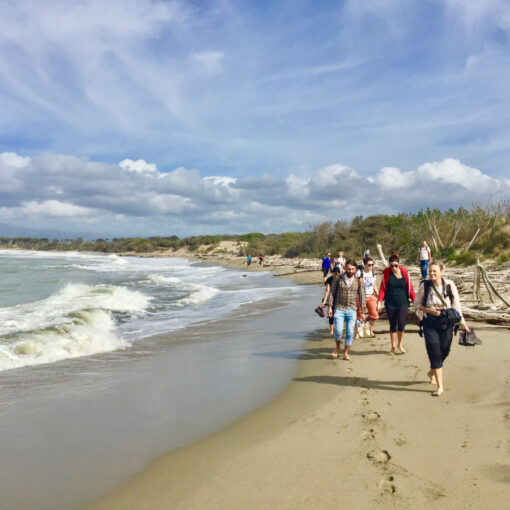
- Natural beach, with dunes and psammophilous vegetation
Characteristic flora
The coastal environment hosts vegetation adapted to sandy beaches and dunes. Notable species include sea bindweed (Calystegia soldanella), sand couch grass (Agropyron junceum), marram grass (Ammophila littoralis)—essential for dune stabilization—and rare plants such as curry plant (Helichrysum stoechas).
These habitats support endemic species of the northern Tuscan coast and represent a botanical heritage of exceptional value.
Fauna
The woodlands and wet depressions are home to numerous animal species typical of coastal environments, including various migratory bird species that overwinter in the area as well as resident species inhabiting the back-dune forests.
Location and how to get there
The Borbone Estate and Macchia Lucchese are located in the northern coastal area of the Park, between Viareggio and Torre del Lago, within the Province of Lucca.
How to reach the area:
- By car or bicycle along the coast, following connections between Viareggio and Torre del Lago near the coastal pine forest
- By public transport plus bicycle, for example by using rail connections to Viareggio station and continuing by bike towards the Visitor Centre
Reference point:
- Villa Borbone Visitor Centre (Viale dei Tigli, La Lecciona area) – an excellent starting point for exploring the area, offering information, maps, and booking options for guided visits
Visiting the area
The Borbone Estate and Macchia Lucchese can be explored via nature trails and marked paths, ideal for walking and cycling excursions. One of the most appreciated routes is the Lecciona Trail, which crosses the coastal woodland and showcases remarkable botanical and landscape diversity among pine forests, shrubs, and wetlands.
Visiting tips:
- Explore the trails in spring and autumn to enjoy seasonal vegetation and wildlife
- Wear comfortable footwear and bring water
- Consult maps and information materials available at visitor centres
Excursions offered by Visit Parco San Rossore
On Visit Parco San Rossore, you will find guided excursions dedicated to the Borbone Estate and Macchia Lucchese, designed to safely explore this coastal area of great environmental interest.
Recommended excursions:
- Walks between woodland and dunes – routes linking the inland areas of Macchia Lucchese to the natural beach of Lecciona
- Coastal nature trails – guided itineraries focusing on coastal vegetation, wetlands, and biodiversity
- Themed guided visits with hiking guides – routes dedicated to flora, fauna, and the history of the coastal landscape
All excursions are led by qualified environmental guides who provide in-depth insights into climate, plant and animal species, and the ecological dynamics of the area. Check the Hiking & Guided Tours Calendar section of www.visitparcosanrossore.it for dates, meeting points, and booking details.
Why visit the Borbone Estate and Macchia Lucchese
Visiting this estate means immersing yourself in a coastal landscape rich in nature, history, and biodiversity, where forests, wetlands, and beaches follow one another, offering unique views and changing atmospheres. It is an ideal destination for:
- those interested in the natural and cultural history of the Tuscan coast
- hikers and nature lovers
- landscape photography enthusiasts
- families and walkers exploring the San Rossore Park